

Will interest rates go down? It's one of the biggest questions for Australian mortgage borrowers right now.
But after this week's RBA rate decision and today's inflation data, there is another question worth asking: What if mortgage rates stay higher for longer?
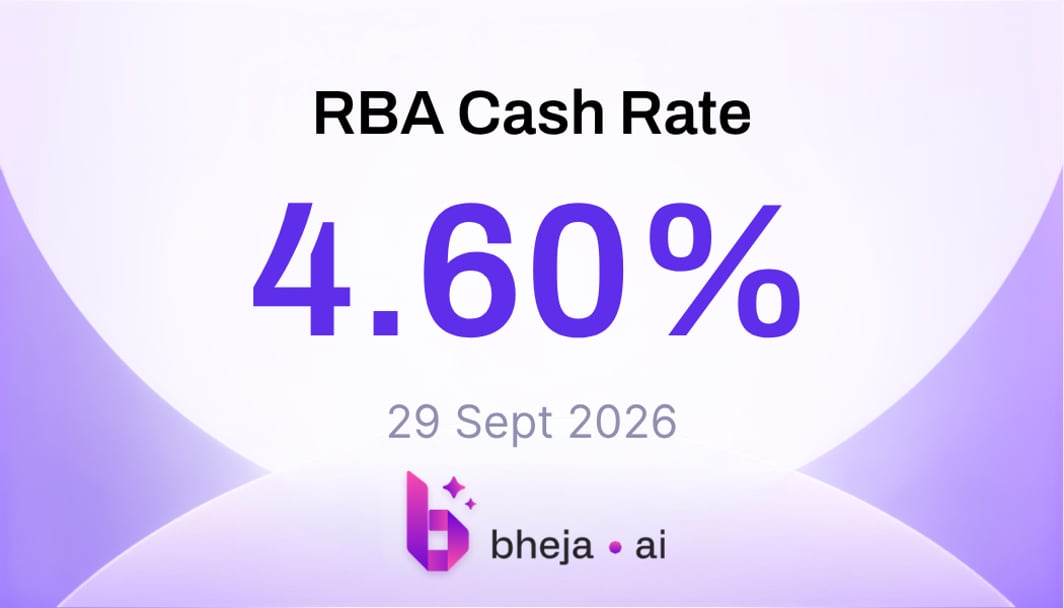
On 29 September, the Reserve Bank of Australia (RBA) raised the cash rate by 0.25 percentage points to 4.60%. It was the fourth increase of 2026 and takes the cash rate to its highest level since 2011. The RBA said inflation remains too high, with some of the upside risks it identified earlier in the year now materialising.
Then, on 30 September, new Australian Bureau of Statistics (ABS) data showed annual CPI inflation had risen to 4.0% in August, up from 3.5% in July. Trimmed-mean inflation, which provides a measure of underlying inflation, remained at 3.6% for the third consecutive month.
The RBA's inflation target is 2% to 3%.
So, when will interest rates fall?
There is no reliable date to point to. The RBA has said future decisions will depend on incoming data and its assessment of the economic outlook. The next rate decision is scheduled for 3 November 2026.
Could interest rates go down again?
Yes. But the latest RBA decision does not tell us when that might happen.
The RBA said higher interest rates are needed to bring inflation back towards target. It also said it would continue to assess the data and would increase rates again if necessary.
At the same time, Governor Michele Bullock said the RBA is not forecasting where interest rates will go. She said that if the tightening already introduced is enough to reduce inflationary pressures, there may not need to be further rate increases.
That leaves borrowers with an uncertain outlook.
The cash rate could remain at 4.60% for a period. It could rise again if inflation remains too high. Or, if inflation and economic conditions change sufficiently, rates could eventually fall.
The important point is that your mortgage does not need to depend on getting the timing right.
Instead, ask: Could I comfortably manage my mortgage if rates stayed around today's level?
If yes, a future rate cut could give your household more breathing room.
If no, waiting for a rate cut may leave the underlying problem unresolved.
Why does today's inflation data matter?
Today's inflation data gives the RBA another important piece of information to consider.
Annual CPI inflation rose to 4.0% in August, from 3.5% in July. Housing was the largest contributor to annual inflation, while transport was also a significant contributor as fuel prices increased.
Trimmed-mean inflation remained at 3.6%.
This measure is important because it removes some of the larger price movements and provides a better indication of underlying inflation trends.
Both headline and underlying inflation remain above the RBA's 2% to 3% target range.
The RBA also said on 29 September that domestic capacity pressures remain elevated and that higher global energy prices are adding to inflation risks.
None of this tells us what the RBA will do at its next meeting.
It does mean borrowers should be cautious about making a household budget that only works if mortgage rates fall soon.
What does this mean for your mortgage?
You don't need to predict the RBA's next move to work out whether your home loan is manageable.
Start with three numbers:
- Your current interest rate
- Your current mortgage repayment
- The repayment you could manage if rates rose further
For example, consider a $600,000 owner-occupier loan with 25 years remaining, principal and interest.
These are illustrative repayments only and do not include fees or other loan costs. That is why your own mortgage can be more useful to monitor than a headline about where the RBA might take rates next.
Check the interest rate you're actually paying
The RBA sets the cash rate. It does not set your individual home loan rate.
Your lender's variable rate, loan balance, remaining term, fees and loan features all affect what your mortgage costs you. So, if the RBA changes the cash rate, check what has happened to your own home loan.
It's also worth checking whether your current rate remains competitive for your circumstances. However, that doesn't automatically mean you should refinance.
A lower advertised rate may come with different fees or features, while switching lenders can involve costs. A longer loan term can also reduce your required repayment while increasing the total interest paid over the life of the loan.
A mortgage review can be as simple as:
Check → Negotiate → Compare → Refinance if worthwhile → Monitor
Check
Find your current interest rate, loan balance, repayment and remaining loan term.
Negotiate
Ask your existing lender whether it can offer you a lower rate.
Compare
Look at comparable loans, including their interest rates, fees, features and eligibility requirements.
Refinance if worthwhile
A lower rate could reduce your repayments or interest costs, but refinancing costs and the overall loan structure need to be considered.
Monitor
Don't treat refinancing as a one-off exercise.
Your loan balance, property value, income, expenses and the wider mortgage market can all change over time.
What if you can't comfortably manage your repayments?
This is where acting early can matter. If your mortgage is becoming difficult to manage, don't assume that waiting for rates to fall is the only option.
Start by checking whether your lender has any hardship assistance or repayment options available. You could also review your household expenses, loan features and repayment structure.
If you have an offset account or accessible redraw, understand how much is available and how using it would affect your loan. The earlier you identify a potential cash-flow problem, the more options you may have to address it.
Stress-test your mortgage before you need to
A rate forecast tells you what might happen. A stress test tells you what you could handle.
Take your current mortgage and calculate the repayment at a rate that is 0.25, 0.50 or 1 percentage point higher.
Then look at what that repayment would mean for your monthly budget.
Could you still cover:
- mortgage repayments
- utilities and groceries
- insurance
- other debts
- childcare and other regular costs
- savings and other financial goals?
You don't have to expect another 1 percentage-point increase to run the calculation. The purpose is simply to understand where your household starts to feel stretched.
What happens if interest rates fall?
If the RBA eventually cuts the cash rate and your lender passes on the reduction, your required mortgage repayment could fall if your lender recalculates it.
That could create more room in your household budget.
You could then consider using the extra cash flow to:
- maintain higher repayments and pay down the mortgage faster
- build your offset balance
- increase savings
- redirect money towards another financial goal
The important point is that your current household budget does not need to depend on a future rate cut. Treat a future rate cut as a potential benefit, rather than something you need to happen for your mortgage to remain affordable.
What if you're thinking about buying a home?
The same principle applies if you are yet to take out a mortgage. Rather than asking only whether interest rates are likely to fall, work backwards from a repayment you could comfortably manage.
Consider what the repayment would look like at today's rates. Then test what happens if rates move higher.
Your borrowing decision also needs to account for your deposit, buying costs, other debts, regular expenses and the amount of cash you want to keep available after buying.
A lower interest rate in the future could make the loan easier to manage. But it should not be the assumption your budget depends on.
When is the next RBA rate decision?
The next RBA Monetary Policy Board meeting is scheduled for 2–3 November 2026, with the cash rate decision due on 3 November at 2.30pm AEDT.
The following decision is scheduled for 8 December. Between meetings, the RBA will continue to assess inflation, economic activity, employment and other data.
That means there can be plenty of speculation about the next move, but no borrower can know the outcome in advance.
Don't just watch the RBA. Watch your own mortgage
The RBA will continue to respond to inflation and economic conditions.
You can't control that. But you can control how closely you monitor your own mortgage.
Keep an eye on three things:
Your rate: Has your lender changed it? Is it still competitive for your circumstances?
Your repayment: What does your current repayment cost each month? What would happen if rates moved higher?
Your available cash: How much do you have in savings, an offset or accessible redraw, and how much of it would you actually want to use?
This gives you a clearer picture of your mortgage than trying to guess the next RBA decision.
Is your mortgage working hard enough for you?
You don't need to know exactly when interest rates will fall to make better decisions about your home loan.
What matters is knowing what you are paying today, what you could afford if rates stay higher for longer, and whether your current loan still suits your circumstances.
Bheja can help you check your mortgage, understand how it is tracking and identify when it may be worth taking another look.
Run a Bheja Health Check and see how your mortgage is working for you