

Bheja's quick take
- Cashback is a one-off payment from a lender for moving your loan to them. It is usually tiered by loan size and has an LVR limit.
- Read the conditions: settlement deadlines, minimum loan amounts and other conditions may apply.
- Compare the whole cost of switching (discharge fees, application fees, possible LMI and fixed-rate break costs) against the saving to make an informed choice.
- A cashback could help with the refinancing costs, but a slightly higher rate can wipe out a cashback within a year or two. Consider comparing the rate and features, treating the cashback as a bonus.
- Offers change often and can be withdrawn, so check the lender’s current page before you apply.
It may be possible to get a cash back when you refinance a home loan in Australia. Some lenders pay a one-off bonus, usually a few thousand dollars, when you move your loan from another lender and settle within a set time. The bonus is generally only worth having if the loan underneath it is competitive, because the interest rate you pay for years outweighs a payment you receive once.
What a refinance cashback actually is
A refinance cashback is a promotion where a lender pays you a set amount when you transfer your home loan to them from another bank or lender. It is a marketing cost for the lender, the same way a discounted rate is. They are paying to win a customer who will, they hope, stay for many years.
The payment is usually made after settlement, not when you apply. One mutual bank, for example, pays its cashback into the primary borrower’s transaction account within 60 days of settlement, so there is a gap between the day your old loan is discharged and the day the money arrives. Plan your cash flow around that gap rather than counting on the money to cover switching costs on the day.
Cashback is separate from a “cash-out” refinance, where you borrow more against your property’s equity and receive the extra as a lump sum. A cash-out increases your debt. A cashback is a lender’s incentive and doesn't add to your debt.
How much do lenders pay, and how is it tiered?
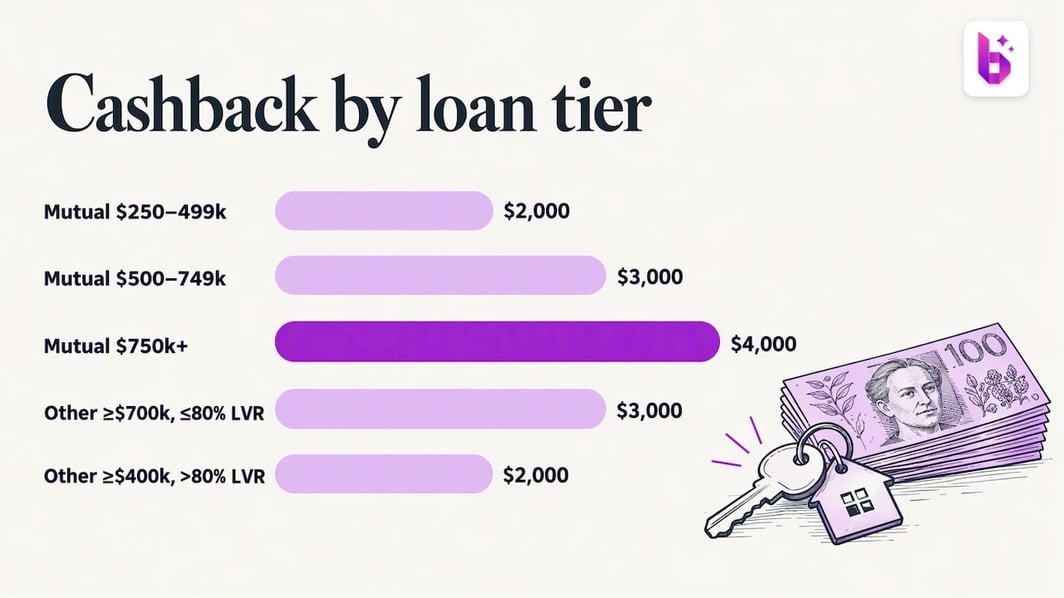
Amounts are typically in the low thousands of dollars and scale with the size of your loan. As one published example, a mutual bank’s current offer pays $2,000 on eligible refinances of $250,000 to $499,999, $3,000 for $500,000 to $749,999 and $4,000 for $750,000 or more. Another lender’s page shows $3,000 on qualifying refinances of $700,000 or more at an LVR of up to 80%, plus a separate $2,000 offer for eligible refinances from $400,000 with an LVR above 80% and up to 95%, where lenders mortgage insurance (LMI) is payable.
A few patterns show up across offers:
- Loan size tiers. Bigger loans earn bigger payments, and there is a minimum below which you receive nothing.
- LVR limits. Your loan to value ratio (LVR) is your loan divided by your property’s value. Many offers apply to LVRs of 80% or less, and some extend higher, in which case LMI may apply. LMI can add to the cost of your loan but you could avoid it with an adequate deposit or a professional discount.
- Time-limited windows. Offers normally run for a few months, then are replaced or renewed with different amounts. Treat any figure you read, including those above, as a snapshot and confirm it on the lender’s own page.
We keep a running comparison on our cashback home loans page, which can help you review the ongoing offers in one place.
The conditions that matter
The headline amount is the easy part. The fine print decides whether you actually receive it, and whether you keep it.
Settlement deadlines
Lenders usually require the application to be received within the promotion period and the loan to settle within a set number of days afterwards. If your current lender is slow to release the discharge, or a valuation is delayed, you can miss it.
Same-group exclusions
Cashback is meant to win new customers. Some lenders therefore exclude refinances from other lenders in their own corporate group. If your current bank is one of several brands under the same owner, a cashback from a sister brand may not apply to you.
One payment per period, and clawbacks
An offer can limit how often you collect. For example, some banks may put restrictions in place, such as only allowing one cashback payment per borrower in a 12-month period. Or, you may need to repay a part of the cashback if you refinance with a few months of settlement. So moving again soon after you switch can cost you half the bonus back, on top of another round of fees.
Offers can be changed or withdrawn
Promotions are not guarantees. Cashback offers may be varied or withdrawn by a lender at any time. Check with a lender whether the deal is still running at the time of applying .
Channel restrictions
Some lenders reserve their best incentives for customers who apply directly online or in branch. Industry press has reported that this reignites concerns about channel conflict with brokers. For you, this means the cashback you see advertised may not be available through every route, so check which application channels are eligible before you start.
What switching costs you
A cashback payment can offset some or all of the upfront cost of refinancing. Whether the switch reduces overall borrowing costs also depends on the new loan’s interest rate, ongoing fees and features.
Potential costs include discharge fees on the existing loan, application or establishment fees on the new loan, and valuation, legal or mortgage registration charges. Not every refinance attracts every fee.
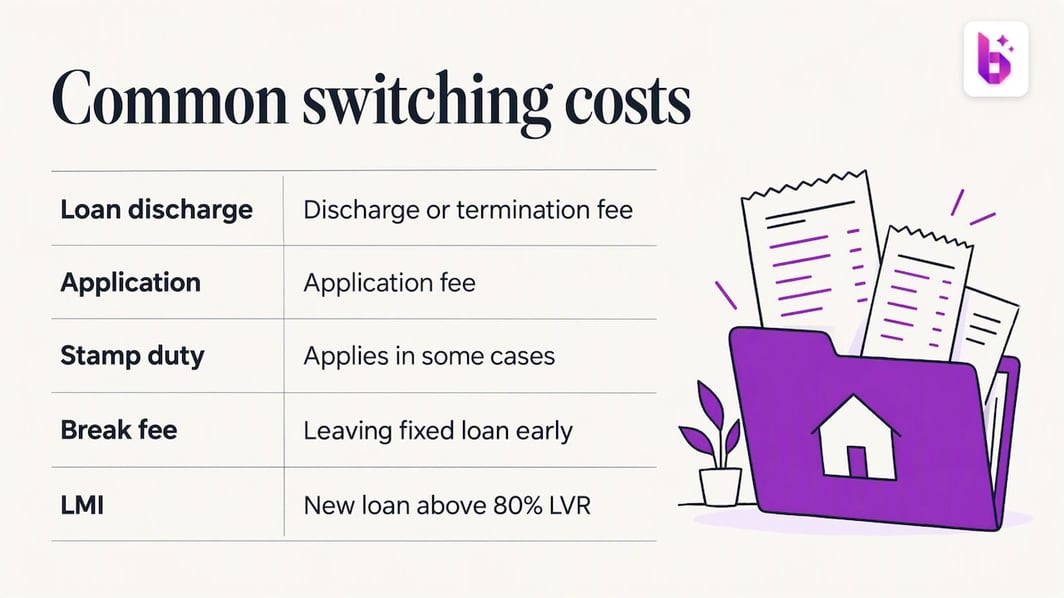
Lenders mortgage insurance may also apply, particularly where the new loan exceeds 80% of the lender’s assessed property value. The lender’s requirements determine whether it is payable.
For a fixed-rate loan, leaving before the fixed period ends may trigger a break cost. The amount depends on the loan contract and circumstances at the time. A lender’s current estimate helps establish how much this would add to the switch.
The remaining loan term matters separately. Extending it can reduce repayments but may increase total interest, even where the new rate is lower. Refinancing does not require restarting a 30-year term.
Can you collect cashback repeatedly?
The idea of switching loans three or four times a year to collect multiple bonuses rarely works in practice. Offers commonly cap payments per borrower, clawback applies for early discharge, and each switch brings fees, valuations and paperwork. A rate that is not competitive also costs you every month between moves. A better approach is to consider a refinance when your loan has drifted above what the market offers, and take a cashback if one happens to be attached to a strong rate.
Negotiate or switch?
Before you move, it is reasonable to ask your current lender whether it will lower your rate. Some will. Others will not match what a new customer is offered, which is the “loyalty tax” many borrowers end up paying without noticing. Our article on whether to negotiate or switch lenders sets out how to approach that conversation and when it is likely to be worth a try.
Our view on cashback
We built Bheja because most borrowers do not know whether they are overpaying. A cashback ad is easy to see. A rate that has quietly slipped above the market is not. We think the right order is: first find out how your loan compares across the market, then look at cashback among the loans that already look good.
Bheja uses open banking data to look at your actual loan and compares it with more than 6,500 live rates from over 90 lenders. We think that matters more than any single promotion, because a one-off payment fades while a competitive rate keeps working. Cashback becomes a pleasant extra when the loan is right, rather than the reason for choosing a loan.
We also think monitoring beats a once-a-year check. Rates and offers change, so we send alerts when a better option appears, and licensed Australian mortgage brokers can help you with the application when you decide to move.
A five-step process to assess any offer
- Find your real position. Note your balance, rate, remaining term, LVR and any fixed-rate expiry date.
- Shortlist on rate and fees first. Ignore the cashback for now and rank loans by rate, ongoing fees and features you use, such as an offset account or redraw.
- Add the cashback and read the conditions. Check minimum loan size, LVR band, same-group exclusions, settlement deadline, payment timing and clawback.
- Tally the costs. Include discharge fees, application fees, any LMI, and fixed-rate break costs.
- Run the formula. Use your realistic time horizon, then apply with enough time to settle inside the window.
If you want the whole sequence from application to settlement, see our step-by-step refinance process.
Check your loan before chasing a bonus
If you are not sure whether your loan is competitive, our Home Loan Health Check shows how your rate compares with the market and whether you may be overpaying.
If the result suggests a better option, you can explore refinance home loans and speak to a licensed Australian mortgage broker about your application. You can also let us monitor your home loan so you hear when a saving appears. Use our mortgage calculators to test repayments, offsets and costs on the way.
FAQ
Yes. Several Australian lenders offer a cashback to borrowers who move an eligible loan from another lender and settle within the promotion period. The amount usually depends on your loan size and LVR, and conditions apply, so read the lender’s current terms.