How reverse mortgages became the new 'Bank of Mum & Dad' — and why the old guarantor model is broken.
If you've tried to help your child buy a home recently, you've probably hit a wall. Offering your property as security used to be enough. In 2026, it isn't. Banks are now rejecting loans based on how much the borrower earns - not just what's backing the loan. And that's quietly pushing a wave of Australian parents toward a very different solution: reverse mortgages.
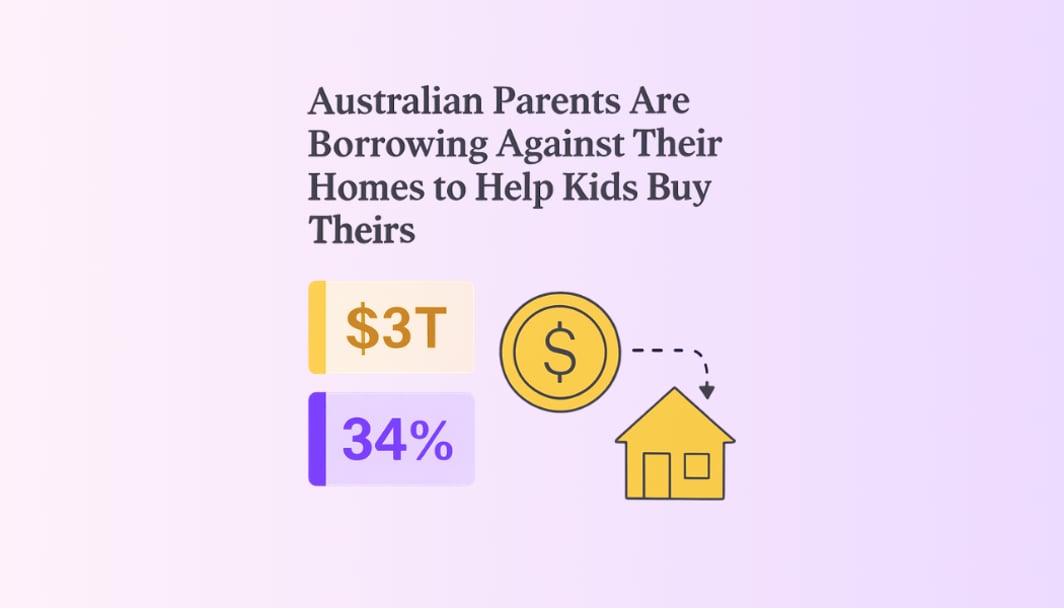
A landmark Deloitte 2026 Australian Reverse Mortgage Survey (conducted with Heartland Bank) reveals that 34% of new reverse mortgage customers are now under 70 years old. For many of them, this isn't about funding their own retirement lifestyle. It's about unlocking equity to gift cash directly to their children - turning dormant home wealth into a first home deposit.
Australians over 60 hold a combined $3 trillion in home equity. A new generation of parents is finding out how to use it.
Why the Guarantor Model is Broken in 2026
For decades, the 'Bank of Mum & Dad' meant one thing: parents signed on as a security guarantor, offering their home to back a child's mortgage. It worked because banks focused on the asset - the property offered as security.
That era is over. APRA's Debt-to-Income (DTI) caps mean banks now focus on income rather than assets. If a borrower's total debt exceeds 6x their gross income, most major lenders will auto-decline the loan - regardless of how much security is offered.
The result: a parent can offer a $1.5 million unencumbered home as security, and the loan still gets rejected.
The DTI Trap: A Before & After
Here's what the numbers look like for a typical scenario - and how a $100,000 cash gift changes the outcome:
By reducing the loan amount needed, a $100k cash gift can also eliminate Lenders Mortgage Insurance (LMI) - saving tens of thousands more.
How a Reverse Mortgage Makes the Gift Possible
A reverse mortgage lets Australian homeowners aged 60+ borrow against their property's equity without making monthly repayments. Interest compounds and is repaid when the home is eventually sold. In 2026, with property values elevated, many parents have more accessible equity than they realise.
Alternatively, the Government's Home Equity Access Scheme (HEAS) offers a lower-rate option for eligible retirees through Services Australia.
Key Protections to Know
- No Negative Equity Guarantee: Statutory protection since 2012. You can never owe more than your home is worth - regardless of how long the loan runs or how compound interest grows.
- Voluntary repayments: You can repay at any time, reducing the interest accrual on your estate.
- ASIC regulation: All reverse mortgage providers must conduct a full suitability assessment before issuing a loan.
The Compound Interest Reality: Run the Numbers First
The most important thing parents must understand is that reverse mortgage interest compounds. At current variable rates (~8.88% p.a.), a $100,000 drawdown does not stay at $100,000.
Approximate figures at 8.88% p.a. compounding. Run a personalised simulation with your broker or lender before proceeding.
What to Do Right Now: A 3-Step Action Plan
Step 1 - Check the 'Gift vs. Guarantee' Gap
If your child has been declined due to DTI limits, ask your mortgage broker to model serviceability based on a $100k cash gift rather than a security guarantee. These are two very different loan structures with very different outcomes.
Step 2 - Run the Equity Erosion Simulation
Before drawing down any equity, calculate the compounding impact on your estate over 10–15 years using the table above as a guide. Your reverse mortgage lender must provide a personalised projection.
Step 3 - Verify the No Negative Equity Guarantee
Confirm that your chosen product carries the statutory No Negative Equity Guarantee. All Australian reverse mortgages issued since 2012 must include this protection under the National Consumer Credit Protection Act.
Is this a lifeline - or are we mortgaging one generation's retirement to fund the next generation's homeownership? Either way, it's happening. The question is whether it's planned or accidental.
Frequently Asked Questions About Reverse Mortgages in Australia (2026)
A reverse mortgage is a loan product for homeowners aged 60 and over that allows them to borrow against the equity in their property without making monthly repayments. Interest compounds and is repaid - along with the principal - when the property is sold, the borrower moves into aged care, or the borrower passes away.