


A non-conforming home loan may suit borrowers who don’t meet standard lending criteria because of past credit problems, irregular income or difficulty providing income documents.
These loans can offer a path to borrowing, but often come with higher rates and fees. Before applying, consider the costs and whether you could move to a standard loan when your circumstances improve.
This guide explains who offers non-conforming loans, who they may suit, what they cost and how they differ from low-doc and alt-doc loans. It also covers what to check before applying and how to review your options afterwards.
Key points
- Specialist lenders offer non-conforming loans for borrowers who don’t meet standard lending criteria. Rates and fees are generally higher.
- Alt-doc and low-doc loans let borrowers use alternative income documents. They aren’t necessarily non-conforming loans.
- A higher rate can add thousands to your loan costs. Compare fees as well as repayments.
- Being self-employed or having a small deposit doesn’t automatically mean you need a non-conforming loan. Check standard options first.
- Review your loan as your circumstances improve. You may qualify for a standard loan later, but refinancing isn’t guaranteed.
What is a non-conforming home loan?
A non-conforming home loan caters to borrowers who fall outside a lender’s standard lending criteria but can still demonstrate their ability to repay.
You might need one if you have past credit problems, a recent bankruptcy or income that doesn’t meet standard lending requirements. However, being self-employed or having irregular income doesn’t automatically mean you need a non-conforming loan.
Specialist non-bank lenders typically offer these loans. They may consider applications that mainstream lenders would decline, assessing factors such as how recent your credit problems are and whether your financial position has improved.
This flexibility generally comes with higher interest rates and fees. Approval still depends on the lender’s assessment of your circumstances and ability to meet repayments.
Who non-conforming loans may suit
Non-conforming loans may be an option for borrowers with:
- Past credit problems, such as defaults, missed repayments or a discharged bankruptcy.
- Income that needs alternative documentation, including some self-employed borrowers, contractors and business owners.
- Other circumstances outside standard lending criteria, such as a tax debt being repaid.
One specialist lender’s published guidance says non-conforming loans may suit borrowers with past defaults or bankruptcy whose finances are now on track, as well as self-employed borrowers with irregular income Approval still depends on the lender’s assessment of your financial position and ability to repay.
Being self-employed or having a small deposit doesn’t automatically mean you need a non-conforming loan. Check standard home loan options first, as lending criteria vary. You may qualify with a bank, credit union or another lender at a lower cost.
How specialist lenders assess your application
Specialist lenders may consider applications that fall outside a bank’s standard lending criteria. They still assess your income, expenses, debts and credit history to decide whether you can afford the loan.
Depending on the lender and product, the assessment may consider:
- The type and size of past credit problems. A small utility default may be treated differently from missed mortgage repayments. Some lenders accept minor defaults, but acceptance isn’t automatic.
- When the problems occurred. Older credit issues may be assessed differently from recent ones.
- Whether debts have been paid. Some specialist products allow paid or unpaid defaults, subject to their lending criteria.
- The circumstances behind the problems. Explain what happened and what has changed, with supporting documents where possible.
- Your current financial position. Your income, expenses, existing debts, deposit or equity, and recent repayment history help the lender assess whether you can manage the new loan.
A specialist lender may offer more flexibility, but you still need to meet its requirements and demonstrate that you can afford the repayments.
Alt-doc and low-doc loans: where they fit
Alt-doc loans or low-doc loans are not always the same as non-conforming loans. They are typically meant for borrowers who need alternative documents to verify their income instead of standard documents, such as payslips or tax returns. This could include self-employed individuals, such as small business owners, freelancers and contractors.
Non-conforming loans are often used by individuals who don’t meet the standard lending criteria of mainstream banks. This can include borrowers with past credit defaults. A loan can be both alt-doc and non-conforming.
What non-conforming loans cost
Expect to pay more. Specialist lenders generally price according to risk, so your credit history, income documents and deposit or equity can affect the rate and fees offered.
Even a modest rate difference can add up. On a $600,000 loan over 30 years, monthly repayments would be approximately $3,706 at 6.28%, compared with $4,105 at 7.28%. That is around $399 more each month.
Over the first five years, the higher-rate loan would cost approximately $30,179 more in interest. You would also owe about $6,224 more at the end of that period.
These illustrative calculations assume monthly principal and interest repayments, unchanged rates and no fees, extra repayments or offset balance. The rates are examples, not current offers or market averages.
Beyond the rate, look at:
- Application and ongoing fees. Check establishment, valuation, settlement and monthly or annual fees.
- Deposit requirements and risk fees. A smaller deposit may affect your rate and eligibility. Ask whether LMI or a separate lender risk fee applies, and whether it would be added to your loan.
- Features. Check whether offset, redraw and extra repayments are available, and what they cost.
- Exit costs. Ask about discharge fees and any fixed-rate break costs if you later refinance.
Moneysmart recommends comparing the interest rate, fees and features when choosing a home loan. A comparison rate combines the interest rate and most fees, but check the costs for your actual loan amount and circumstances.
The risks, and when one doesn't make sense
The main risks are the ones above: a high interest rate, and taking on repayments you can't comfortably manage. A few situations call for a pause:
- You haven't checked mainstream lenders. A knockback from one bank doesn't mean every bank will decline.
- The repayment only works in a perfect month. Test the loan at a higher rate and with a lower income month, not just at today's numbers.
- The problem is about to age out. If a default will drop off your file in a few months, waiting may save a great deal.
- You're stretching for a property you could do without. The cost of premium pricing is paid every month.
If your finances are under strain, free help is available. A financial counsellor (call the National Debt Helpline on 1800 007 007) can talk through options before you sign anything.
How to apply: a practical sequence
- Get your credit reports. You can request your credit reports from the credit reporting bodies, and look for errors, duplicate listings and defaults you've already paid.
- Fix what you can. Dispute wrong entries and settle outstanding items before applying.
- Gather income evidence. Depending on your situation, that may be recent BAS, business bank statements, an accountant's letter, or payslips and tax returns.
- Write your loan notes. One page, plain language: what happened, what changed, what your income and expenses look like now.
- Work out your numbers. Use a borrowing capacity calculator and a repayment test at a higher rate.
- Compare across lender types. Include banks, mutual lenders and specialists, not only the first one that says yes.
- Consider applying through a licensed broker if your case is complex. Specialist policies vary a lot, and an experienced broker can match your file to the right one. A broker can also explain how they're paid.
Getting back to a standard loan
You may be able to refinance to a standard loan when your circumstances improve. This could mean having more income documents available, a stronger recent repayment record or more equity in your home. Requirements vary by lender, so two years of tax returns or a paid default won’t automatically make you eligible.
Before you switch, count the costs. Moneysmart notes that refinancing can involve fixed-rate break costs, discharge fees and application fees. If you have less than 20% equity, LMI may also apply. Any partial refund of existing LMI depends on the policy and eligibility conditions.
Consider reviewing your loan every six months. Update your income documents, check your credit report and compare the options available. You can also ask your current lender whether you qualify for a lower rate or a different product.
If you're considering refinancing, our refinance calculator can help you estimate whether the savings outweigh the switching costs.
Keep your loan under review
A non-conforming loan may suit your circumstances today, but your options could change as your income records, credit history or equity improve. Keeping your documents current and setting a regular review date can help you identify when it’s worth exploring a different loan.
Bheja’s Home Loan Health Check lets you compare your current rate with live rates from other lenders. A lower rate is a starting point for further checks—you’ll still need to meet the lender’s criteria and weigh the savings against switching costs.
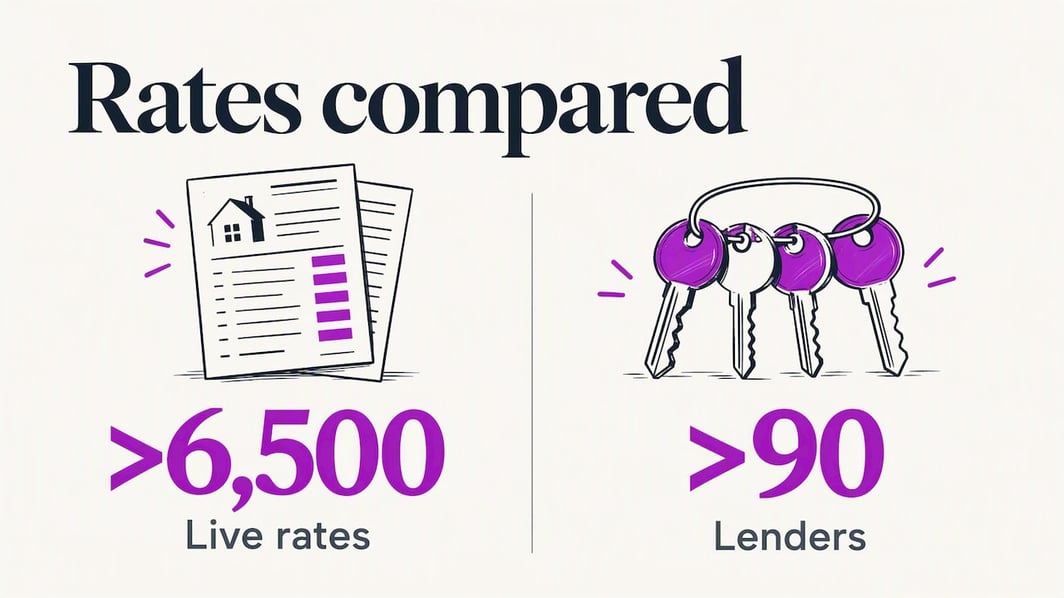
If you want help exploring your options, you can connect with a licensed mortgage broker through Bheja for an obligation-free discussion. A broker can assess whether you still need a specialist loan or may qualify for a standard option.
FAQ
A conforming loan meets a mainstream lender's standard credit and income policy. A non-conforming loan is for borrowers outside that policy, and it is usually provided by a non-bank specialist. The trade-off is often flexibility in assessment against higher rates and fees.