


- Refinance when the savings from a lower rate or better features clearly outweigh the exit and entry costs, not simply because rates moved.
- Ask your current lender for a better rate first. Lenders may cut the rate on an existing loan to keep your business.
- Common triggers: the end of a fixed term or introductory rate, a rate gap against the market, a change in equity, or a change in your circumstances.
- Work out your break-even point in months, and keep the new loan term close to your remaining term.
- If you can’t see a clear saving, waiting costs you little. If you are paying well above market, waiting costs you every month.
When is the right time to refinance your mortgage? Generally, it's when a new home loan offers a worthwhile benefit after accounting for switching costs. That could mean a lower interest rate, better loan features or a loan that better suits your changing financial needs.
There's no perfect date to refinance. What matters is how your current loan compares with available options, what switching would cost and whether refinancing makes financial sense for your circumstances.
Can you refinance at any time?
Generally, yes. In Australia, there is no mandatory waiting period after settlement or legal limit on how often you can refinance. However, being able to apply doesn't guarantee approval. Your financial circumstances, property value and the new lender's policies determine whether you qualify.
A few factors can affect your ability to refinance:
- Fixed-rate loans: You can refinance before your fixed term ends, but you may face break costs.
- Recent loans: Some lenders may apply additional scrutiny to recently settled loans. Cashback offers may also have clawback conditions.
- Income and expenses: If your income has fallen or your debts have increased, you may no longer meet the new lender's serviceability requirements.
- Property equity: A fall in your property's value could push your loan-to-value ratio (LVR) beyond what the new lender will accept.
- Credit history: Missed repayments or a deteriorating credit score may affect your eligibility.
So, while you can generally apply at any time, refinancing depends on whether a lender will approve your application and whether the benefits outweigh the costs.
The signs that it may be time to refinance
1. Your rate is well above what new customers are offered
Lenders often reserve their sharpest rates for new borrowers, and existing customers can drift onto higher rates without a letter telling them so. This gap is sometimes called a loyalty tax. A difference that looks small on paper adds up over a long loan. On a $600,000 balance, a 0.5 percentage point gap is roughly $3,000 a year in interest at the start, before any change in the balance.
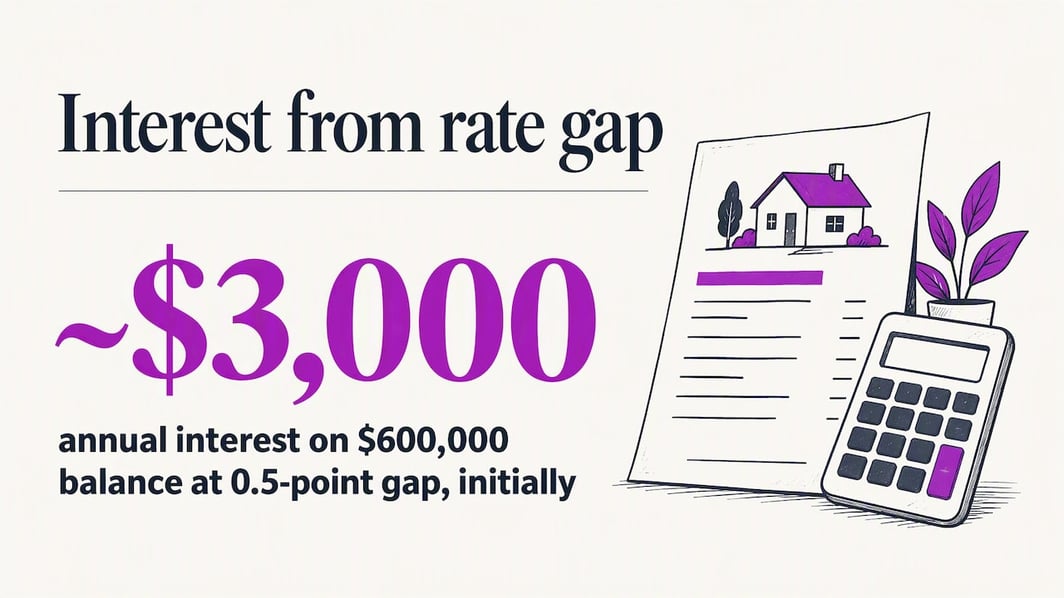
That is an illustration of the arithmetic, not a quote from any lender. Your own numbers depend on your balance, remaining term and repayment type. You can compare against today’s current mortgage rates in Australia to see where you stand.
2. A fixed term or introductory rate is about to end
When a fixed period ends, most loans roll onto the lender’s standard variable rate, which is often higher than what is on offer to new customers. The months before expiry are a natural window to compare. Starting early gives you time to line up a new loan, so you can switch as the fixed term ends rather than paying a higher rate while you wait.
If you want to leave before the fixed term ends, ask your lender for the break cost (sometimes called an economic cost) in writing. It can be small or large depending on how rates have moved since you fixed.
3. The cash rate has moved
The Reserve Bank’s decisions flow through to variable rates, but not evenly. The RBA’s February 2026 statement noted that average variable mortgage rates fell by around 75 to 80 basis points during 2025. Yet individual borrowers did not all see the same drop. Some lenders passed cuts on in full, others in part, and lenders have also moved quickly when rates rose.
That is why a cash rate move is a prompt to check your own rate, not a reason to act on its own. After any RBA meeting, ask two questions: did my lender pass it on, and is my rate still competitive? Our RBA cash rate coverage tracks how lenders respond.
4. Your equity has grown
If your property has risen in value or you have paid down the loan, your loan-to-value ratio (LVR) may have dropped. Lower LVRs often unlock lower rates. If you originally borrowed with less than 20% deposit and paid lenders mortgage insurance (LMI), crossing 80% LVR can open up cheaper options.
The opposite matters too. If your equity is still under 20% with a new lender, you may need to pay for LMI again, which can eat into your potential savings. Check this before you apply.
5. Your life or goals have changed
Rate is not the only reason. People refinance because:
- they want an offset account or redraw facility they don’t currently have
- they are moving from owner-occupier to investor, or the reverse
- they want to split the loan between fixed and variable.
- their income has changed and they need lower repayments, or higher so they can pay off sooner.
- they want to access equity for renovations or a second property
If a feature is what you need, the saving can come from using it well. An offset account calculator can show what a balance sitting in an offset does to your interest.
6. Your loan has been quiet for years
If you've had the same home loan for several years without checking your rate, you could be missing out on a better deal. Lenders regularly change their rates and offers, but existing borrowers don't always receive the most competitive rates.
You don't have to wait two or three years to review your mortgage. With Bheja's Home Loan Health Check, you can see how your current loan compares with available options. You can also connect your loan through Open Banking for ongoing monitoring, so Bheja can alert you when it identifies a better rate.
That way, you don't have to keep checking the market yourself or wait years to discover you may be paying more than necessary.
When refinancing may not be worth it
Switching is not always smart. Pause if:
- The saving is tiny. If the monthly difference is small and costs are high, the break-even stretches out for years.
- You are planning to sell soon. You may not stay long enough to recover costs.
- You'd extend your term. A lower repayment from a longer loan can mean paying much more interest overall. ASIC’s Moneysmart suggests keeping a loan length similar to your remaining term.
- You’d lose a good feature. Some older loans have features that are costly to replace. If you need the feature, consider the cost of keeping it versus your savings or inconvenience without it.
- Your credit or income has weakened. A new lender will assess you afresh. If your situation is worse than when you borrowed, you may not qualify for the best rates.
- You are chasing a cashback. A one-off incentive can be outweighed by a higher ongoing rate. Compare the total cost over several years.
Costs to weigh before you switch
Before you decide, list every cost on both sides.
Moneysmart lists break costs, discharge fees and LMI as the things to check when switching, and notes that you should confirm whether the new loan has a longer total term than your current one.
A simple break-even check
Here is the formula:
Break-even (months) = total switching costs ÷ monthly saving
A worked example, using round figures to illustrate the method:
- Switching costs: $1,200 (discharge, application and other fees)
- Current monthly repayment: $3,400
- New monthly repayment at the lower rate, same remaining term: $3,250
- Monthly saving: $150
- Break-even: $1,200 ÷ $150 = 8 months
If you expect to hold the loan well beyond eight months, the switch pays for itself. If the break-even is four years and you might sell in two, it probably does not.
Keep the remaining term the same when comparing. Otherwise a lower repayment can be the result of stretching the loan, not a better rate. Our refinance calculator and the Moneysmart switching calculator both do this arithmetic for you.
Negotiate first, then switch if you need to
Before switching lenders, ask your current lender for a better rate. Banks may offer existing customers a discount to retain their business, particularly if they can show a more competitive offer elsewhere.
You may also be able to restructure your existing home loan rather than refinance with another lender. Depending on your circumstances, this could mean changing loan products or features without the costs and paperwork involved in switching banks.
If your lender won't match a competitive offer, compare the potential savings against the costs of refinancing. A lower rate is worth considering, but only if the overall numbers work in your favour.
Should you refinance now or wait?
Waiting for interest rates to fall may seem sensible, but there's no guarantee that your lender will offer you a better deal when they do. You could also be paying more than necessary in the meantime.
Rather than trying to time the market, compare what refinancing could save you today against the costs involved.
Here's what to check:
- Compare your rate. See how your current home loan compares with rates available for your loan amount, loan-to-value ratio (LVR) and circumstances.
- Calculate your break-even point. Work out how long it would take for the potential savings to cover switching costs. A shorter break-even period may make refinancing more worthwhile.
- Check your fixed-rate term. If you're on a fixed rate, break costs could outweigh the potential savings. Waiting until your fixed term expires may be more practical.
- Consider your future plans. If you're planning to sell, move or restructure your mortgage soon, you may not have enough time to recover the switching costs.
- Watch interest rate movements. The RBA cash rate influences mortgage pricing, but lenders also make their own decisions. Our analysis of Australia's changing interest rate outlook explains the factors shaping expectations.
If your current rate is significantly higher than comparable offers, it may be worth exploring your options now. If the difference is small or switching costs are high, staying with your lender and monitoring the market could make more sense.
Our perspective
We built Bheja because most people only look at their home loan when something goes wrong, or when a friend mentions a better rate. By then they may have overpaid for months or years. The problem is rarely that people are careless. It is that nothing prompts them to check.
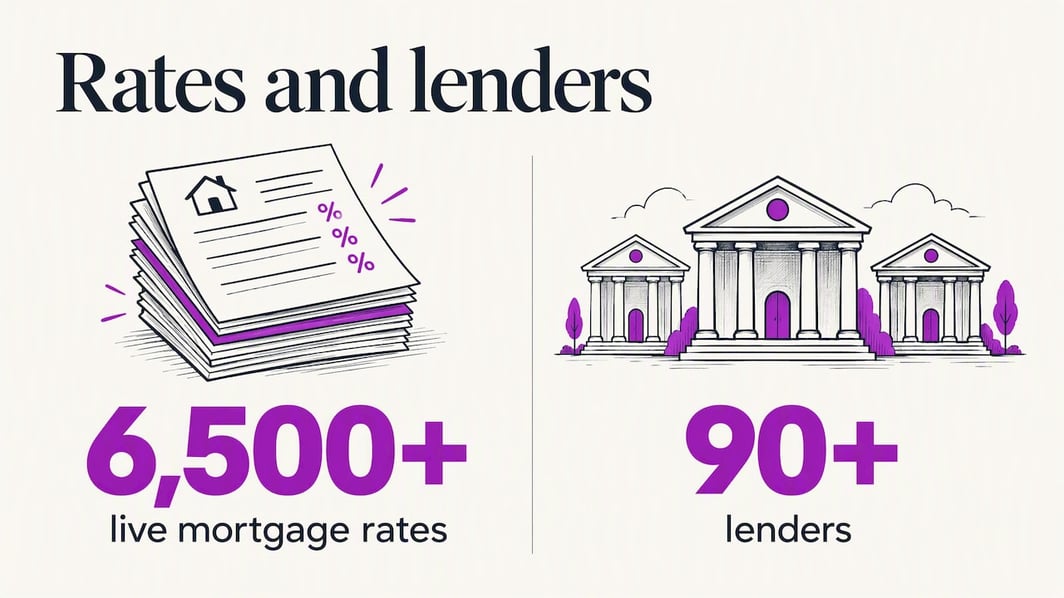
We think the right time to refinance is less an event than a habit of watching the gap. With open banking data, we can see your actual loan, compare it against more than 6,500 live rates from over 90 lenders, and flag when the gap is big enough to be worth acting on. We also think that sometimes the right answer is to stay put, or to ask your lender for a discount. A tool that always says “switch” is not on your side.
Our advice: check on a schedule, run the break-even before you move, keep your term steady and talk to a licensed Australian mortgage broker when you are ready to apply.— Pravin
Check your own loan
If you would rather not do the comparison by hand, our Home Loan Health Check uses your loan details to show whether you may be overpaying and what alternatives exist across our lender panel.
If the numbers point to a switch, our refinance service connects you with licensed Australian mortgage brokers who can help with the application. You can also set up loan monitoring so you get an alert when a meaningful saving appears, instead of having to remember to look. For the mechanics, see the refinance process step by step.
FAQ
Refinance when a lower rate or better features would save you more than the switch costs, and after you have asked your current lender for a better deal. Run the break-even calculation first. If you recover costs within a reasonable period and you plan to keep the loan that long, it is a good point to act.